
'The delay is high in India, and even higher in the case of electric vehicles.'

Truck rentals saw a positive momentum across most key trunk routes due to an increased pre-kharif agricultural activity and a resilient manufacturing sector. The Kolkata-Guwahati-Kolkata corridor witnessed a month-on-month (M-o-M) rise of 2.4 per cent, while the Mumbai-Chennai-Mumbai route grew by 1.9 per cent and the Delhi-Hyderabad-Delhi route saw a 1.6 per cent increase in truck rentals, said June edition of the Shriram Mobility Bulletin.
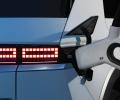
India may see its busiest EV festive season in 2025 with SUVs, luxury cars and scooters set to launch, but rare-earth supply bottlenecks risk delaying rollouts.

If TVK MLAs and ministers are perceived as clean, or demonstrably cleaner than their predecessors, the credibility dividend will be enormous. The voter will feel rewarded, points out Ramesh Menon.

EV manufacturers point out that converting a regular petrol car into a flex-fuel vehicle requires only about Rs 17,000-25,000 per unit, whereas developing an EV demands vastly greater investments in research, battery development, and localisation.

Shares of tyre manufacturers have outperformed broader equity benchmarks, buoyed by multiple tailwinds. Softer raw material prices, an uptick in demand from automakers following the reduction of the goods and services tax (GST) rates, and steady replacement demand have lifted sentiment toward the sector.

M&M also showcased its new format next generation 'dealership of future' designed by Pininfarina.
The move offers flexibility in compliance but also places penalties squarely on the designated manager of such a pool.
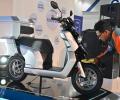
Seven electric two-wheeler companies have suffered a cumulative loss of over Rs 9,000 crore on account of unpaid dues and loss of market after their subsidies were stopped last year, the Society of Manufacturers of Electric Vehicles (SMEV) said on Wednesday. These companies have also been directed by the govt to refund the subsidies availed by them. The audit by SMEV's chartered accountants indicates the total, cumulative damages to affected companies could account for over Rs 9,000 crore on a conservative basis, it noted.

Network scale seen as central to tapping smaller markets.
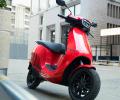
Ola Electric on Tuesday clarified that its February sales figures reflect genuine customer orders after full payments, and not just preliminary bookings with a token amount, stating that "nearly 90 per cent" of these orders were paid in full at the time of placement. "To be clear, the sales figures for February 2025 represent genuine customer demand backed by financial commitment, not token-amount bookings.

'In India's competitive automotive market, staying relevant means continuously raising the bar.'

In a boost to the electric vehicle boom in India, Taiwanese major Hon Hai Technology Group (aka Foxconn) is likely to set up an EV manufacturing unit in India through its subsidiary Foxtron. Amid speculation that the company may look at Tamil Nadu and probably the Ford India unit near Chennai for its new facility, sources indicate that the group was already betting big in the electric vehicle component space in India through Bharat FIH, which is already having a tie up with companies like Ola Electric and Ather. Bharat FIH currently has two manufacturing units in Tamil Nadu's Sriperumbudur that manufactures phones like Apple iPhones and Xiaomi phones.

Maruti Suzuki's e-Vitara marks its high-stakes EV debut with strong export ambitions, lifting its stock even as analysts caution over pricing and fierce competition.
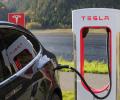
BMW Group India is unfazed by the prospect of Tesla entering the electric vehicle market here and feels it will help grow the segment, according to its Managing Director and CEO Vikram Pawah. The group, which sold a total of 1,249 units of electric cars in India across two brands -- BMW and MINI -- has already sold 646 units in the first quarter of 2025 and is keeping its forecast of 15 per cent of its total sales in India coming from EVs, Pawah told PTI in an interview.

Japanese auto major Honda considers India a key market for its future growth alongside the US and Japan, according to Honda Cars India President and CEO Takashi Nakajima. The Tokyo-headquartered automaker, which operates in India through a wholly owned subsidiary, plans to drive in more SUVs in the country, as the segment continues to see robust sales across varied price points.

'Every year we import approximately $70 billion worth of gold -- closer to $72 billion in 2025-2026, an all-time record.' 'There is no parallel for this anywhere in the world. And this love for gold will not disappear overnight.'
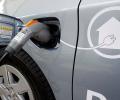
At a time when consumers increasingly embrace green mobility solutions, it is not electric cars but hybrids that are taking the lead, as automotive sales data indicate. Since January, 64,097 electric cars have been sold compared to 266,465 hybrids, according to data from the ministry of road transport and highways' Vahan dashboard. Hybrid car sales have surged from 4.42 per cent of the 4.1 million cars sold in calendar year 2022 to 7.2 per cent this year.

For UK automakers, market access to India will be limited by quantity caps and phased tariff cuts, especially on petrol, diesel and electric vehicles.

The Rs 500-crore Electric Mobility Promotion Scheme (EMPS) 2024, introduced by the Centre to provide incentives to the electric mobility industry, will conclude on July 31 with barely 3.6 per cent of the targeted vehicle sales achieved so far. This is in stark contrast to the earlier flagship Faster Adoption and Manufacturing of Electric Vehicles (FAME) scheme, which exceeded its sales targets. According to data from the Ministry of Heavy Industry (MHI), only 13,499 of the 372,215 targeted vehicles have been sold under the EMPS scheme.

Siam argues that a 2040 ban could destabilise ongoing and future investments and threaten millions of jobs in the automotive value chain.

Led by Ola Electric, which registered an industry record of 53,186 vehicles in March, electric two-wheeler (e2W) penetration hit a record at 8.91 per cent - the highest ever for a month (based on Vahan data).
At a time when consumers increasingly embrace green mobility solutions, it is not electric cars but hybrids that are taking the lead, as automotive sales data indicate. Since January, 64,097 electric cars have been sold compared to 266,465 hybrids, according to data from the Ministry of Road Transport and Highways' Vahan dashboard. Hybrid car sales have surged from 4.42 per cent of the 4.1 million cars sold in calendar year 2022 to 7.2 per cent this year.

Companies making electric two-wheelers, through their association Society of Manufacturers of Electric Vehicles (SMEV), have taken on the Department of Heavy Industries (DHI), saying they did not get subsidies for even half the mandated 1 million units they manufactured. Subsidies are given under Faster Adoption and Manufacturing of Hybrid and Electric Vehicles 2 (FAME II). In a petition to the parliamentary standing committee on industry energy and estimates, the SMEV said the department had done an "accounting error" by showing that it (the department) was close to achieving the mandated target by including sales of the EVs that were "not funded" under the scheme.

Three additional vehicle makers and five more auto component makers will begin availing financial incentives under the production-linked incentive (PLI) scheme for the automobile sector from 2026-27 (FY27) onwards, Hanif Qureshi, additional secretary at the Ministry of Heavy Industries (MHI), said on Wednesday.
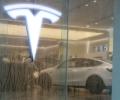
"I welcome Tesla here in Mumbai. Tesla has opened an experience centre here, and it is a statement that Tesla has arrived and it's a statement they Tesla has arrived in the right city and right state," Fadnavis said on the occasion.

Royal Enfield is planning to introduce its electric bike initially in developed markets such as Europe and the US where it anticipates better traction for the premium product, a top company executive said on Tuesday. Royal Enfield, a division of Eicher Motors, forayed into electric bike space on Monday with the unveiling of its first model under the all-new Flying Flea brand.
'Through volume numbers and unit sales one can see, we are not making a loss'
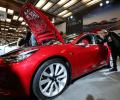
American electric carmaker Tesla has opened recruitment for various roles in India, including business operations analyst and customer support specialist, in what could be a precursor for the company's entry into the country. As per the job postings on the company's website, the posts are for the 'Mumbai Suburban' area.

While many areas compete for resources, defence, education, and adaptation deserve focus for maximum impact, suggests Laveesh Bhandari.

With just a month left in this financial year, electric two-wheeler sales, so far, are at just 62 per cent of the ambitious target of 1 million units set for 2022-23 by the NITI Aayog. According to VAHAN data, compiled by the Society of Manufacturers of Electric Vehicles (SMEV), 620,006 units of electric two-wheelers were sold across the country in FY23 until February 21. Though the industry may miss the 1-million target, sales in FY23 are already up 146 per cent from 249,621 units sold in FY22.

Vinfast sold 137 cars versus Tesla's 109 during the festive months of September and October, as BYD maintained a strong lead with over 1,100 cars sold, according to Fada data.

India's first trillion-dollar company will be built on technology it owns, not just operates, predicts Ajay Kumar.

Investment proposals for around Rs 1.88 trillion through 35 major agreements, spread across deep tech, green energy, and aerospace, were the hallmark moment of the first day of the two-day "Telangana Rising Global Summit", which started on Monday.

Bengaluru-headquartered electric two-wheeler manufacturer Ather Energy is all set to file its draft red herring prospectus within the second week of September to the Securities Exchange Board of India (Sebi) for its maiden initial public offering (IPO), in which it is expected to raise over $450 million. On Tuesday, the fourth-largest electric two-wheeler maker in the country by volume raised Rs 600 crore from its existing investor, the National Investment and Infrastructure Fund (NIIF), catapulting itself into a unicorn with a valuation of $1.3 billion.

The state has clocked more than 8 per cent growth in the last three financial years, braving global headwinds and thriving on its manufacturing strength
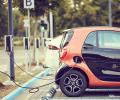
Lithium-ion cells, primarily imported from China, are likely to become cheaper following punitive tariffs imposed by the US on Chinese battery cells.

The Indian Defence Ministry has approved the procurement of 114 Rafale fighter jets from France, a significant step towards bolstering the Indian Air Force's combat capabilities. The decision comes ahead of French President Emmanuel Macron's visit to India.

Scientists at the GraphIN 2026 conference highlighted the potential of ultra-sensitive graphene sensors for rapid disease detection and various other applications, including flexible heating pads for neonatal care and lightweight structures for unmanned aerial vehicles.
The growing complexity of E2Ws and the evolving threat landscape make it challenging to guarantee complete immunity from attacks.
